
Increase Insulin sensitivity
4 Natural Ways to Improve Insulin Sensitivity in PCOS
1/31/20261 min read
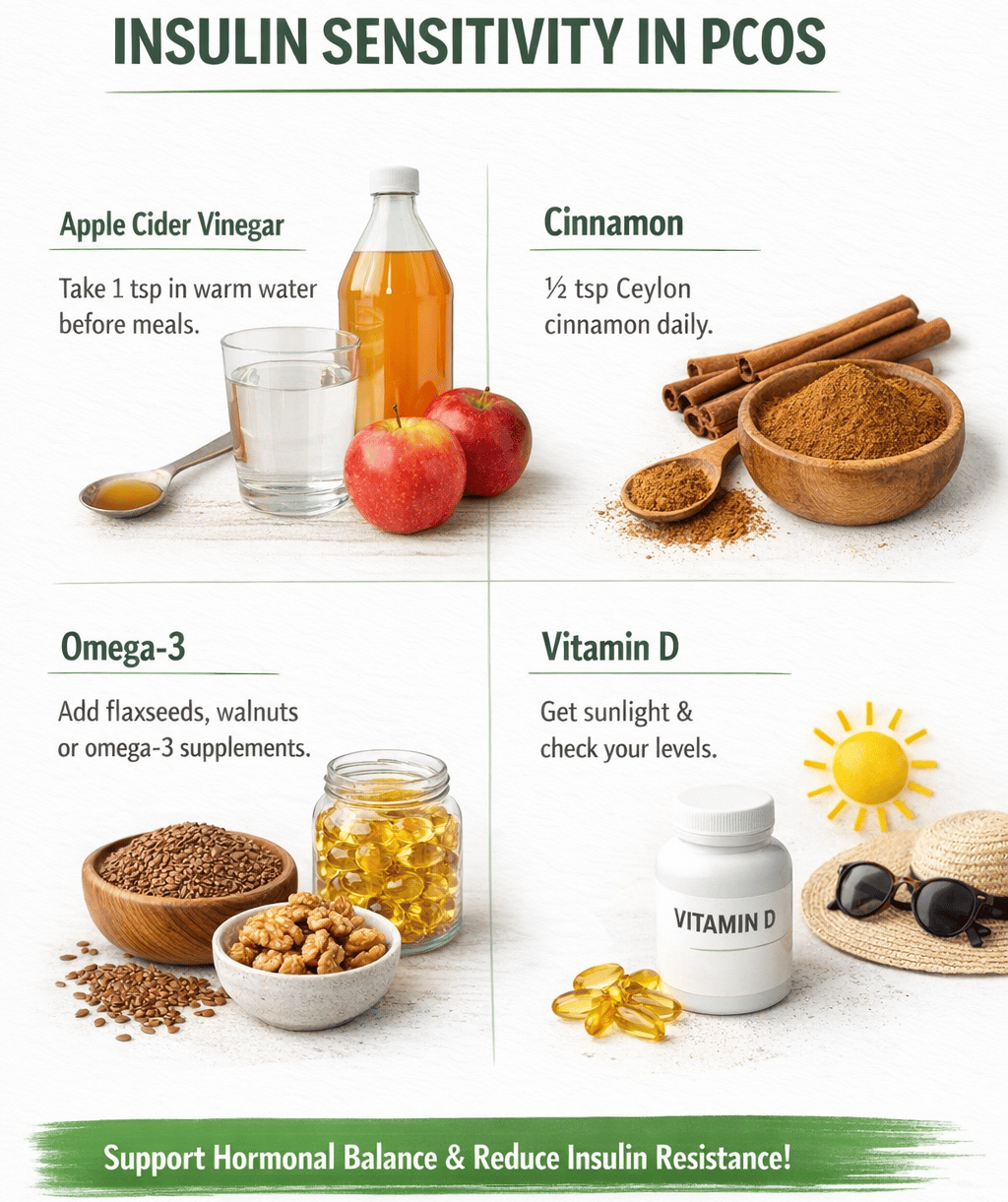
Insulin resistance is one of the core drivers of PCOS, even in women who appear lean or have “normal” blood sugar reports. When the body doesn’t respond well to insulin, it leads to higher insulin levels, which then trigger hormonal imbalance, weight gain, acne, fatigue, cravings, and irregular periods.
The good news? Small, consistent lifestyle additions can significantly improve insulin sensitivity. Let’s look at four simple, evidence-backed supports that work gently but effectively.
1. Apple Cider Vinegar (ACV)
Apple cider vinegar helps improve how your cells respond to insulin, especially after meals.
How it works:
Slows down the digestion of carbohydrates
Reduces post-meal blood sugar spikes
Improves insulin signaling in muscle cells
Best way to use:
1 tsp ACV in a glass of warm water
Take before meals (especially carb-heavy meals)
Avoid on an empty stomach if you have acidity or gastritis
👉 Over time, this helps reduce sugar cravings and post-meal fatigue—very common in PCOS.
2. Cinnamon
Cinnamon is a powerful insulin-sensitizing spice and works almost like a natural glucose regulator.
How it works:
Improves insulin receptor activity
Helps glucose move from the bloodstream into the cells
Reduces fasting blood sugar and insulin levels
Best way to use:
½ tsp Ceylon cinnamon daily
Add to herbal tea, smoothies, or warm water
Avoid excessive use if you have liver sensitivity
👉 Regular use supports better energy levels and fewer sugar crashes.
3. Omega-3 Fatty Acids
PCOS is an inflammatory condition, and inflammation worsens insulin resistance. Omega-3s help break this cycle.
How it works:
Reduces systemic inflammation
Improves cell membrane flexibility (cells respond better to insulin)
Supports hormonal balance and ovulation
Sources:
Flaxseeds, chia seeds, walnuts
High-quality vegan or fish-based omega-3 supplements
👉 Omega-3s also help with PCOS-related anxiety, mood swings, and menstrual pain.
4. Vitamin D
Vitamin D deficiency is extremely common in women with PCOS and is strongly linked to insulin resistance.
How it works:
Improves insulin secretion from the pancreas
Enhances glucose uptake in cells
Supports ovarian and thyroid function
Best practice:
Always check blood levels before supplementing
Combine supplementation with sunlight exposure
Take alongside healthy fats for better absorption
👉 Correcting Vitamin D deficiency alone can improve cycles, energy, and insulin response.
Wellniva
Empowering women through holistic wellness coaching.
Contact
+91 8861686135
© 2025. All rights reserved.
Subscribe