
Inositol and PCOS
The Role of Inositol in PCOS Inositol is a researched B-vitamin–like compound that plays a crucial role in glucose signaling and insulin sensitivity. Interestingly, it has a naturally sweet taste and is involved in how the body processes sugar at the cellular level.
1/31/20261 min read
My post content
The Role of Inositol in PCOS
Inositol is a lesser-known but highly researched B-vitamin–like compound that plays a crucial role in glucose signaling and insulin sensitivity. Interestingly, it has a naturally sweet taste and is involved in how the body processes sugar at the cellular level.
Inositol exists in multiple forms—nine, to be precise—but two forms are especially relevant in PCOS:
Myo-inositol (MYO)
D-chiro-inositol (DCI)
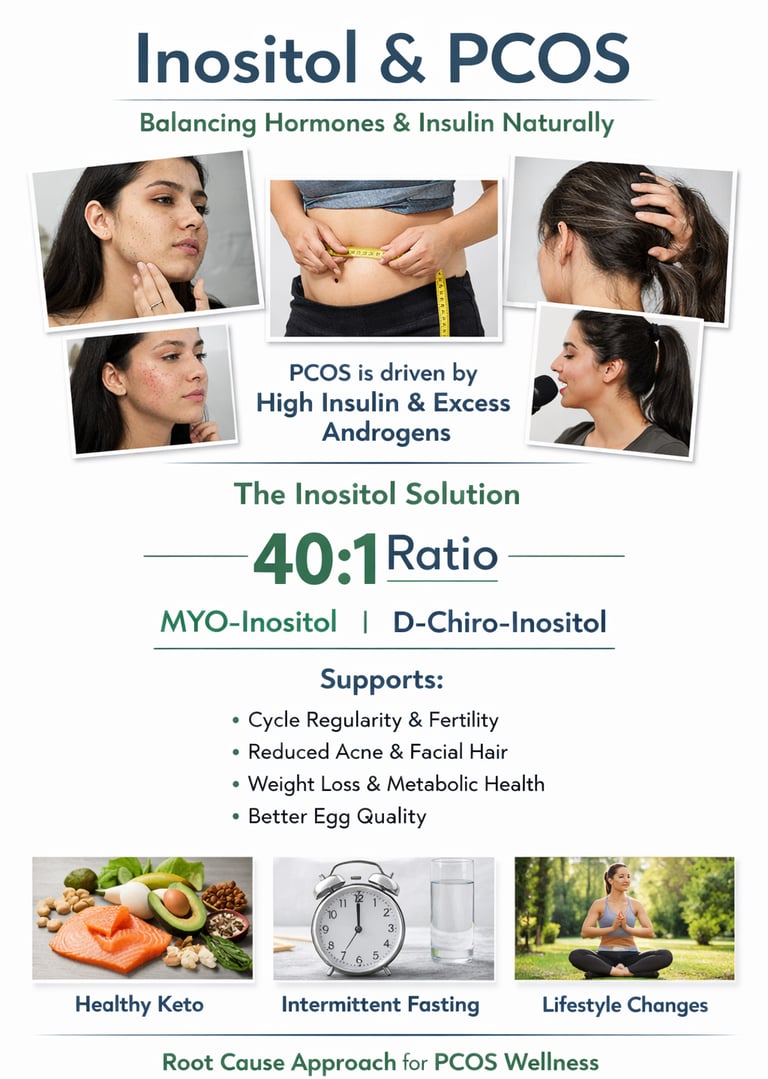
In a healthy metabolism, MYO converts into DCI in a balanced way. However, research suggests that in women with PCOS, this conversion may be impaired. This imbalance can further disrupt insulin signaling, ovarian function, and hormone regulation.
Why the 40:1 Ratio Matters
Clinical studies have shown that providing inositol in a 40:1 ratio of MYO to DCI closely mirrors the body’s natural physiological balance.
When this ratio is restored, many women experience improvements in:
Menstrual regularity
Ovulation and fertility markers
Acne and hair concerns
Weight management
Egg quality and ovarian response
A Supportive Tool—Not a Standalone Fix
While inositol can be a valuable support, it is not a magic pill.
For lasting improvement in PCOS symptoms, insulin levels must be addressed at the root. This means combining targeted supplementation with:
Blood-sugar-friendly nutrition
Consistent meal timing
Lifestyle practices that reduce insulin resistance
When insulin levels come down, the hormonal environment begins to shift—reducing excess androgen production naturally.
The Takeaway
PCOS is not just a reproductive condition—it is a metabolic and hormonal imbalance that requires a whole-body approach. Inositol, especially in the evidence-based 40:1 MYO-to-DCI ratio, can significantly enhance results when paired with insulin-supportive lifestyle strategies.
Address the root, support the system, and the symptoms begin to follow.
Wellniva
Empowering women through holistic wellness coaching.
Contact
+91 8861686135
© 2025. All rights reserved.
Subscribe