
PCOS and the Gut-Brain Axis
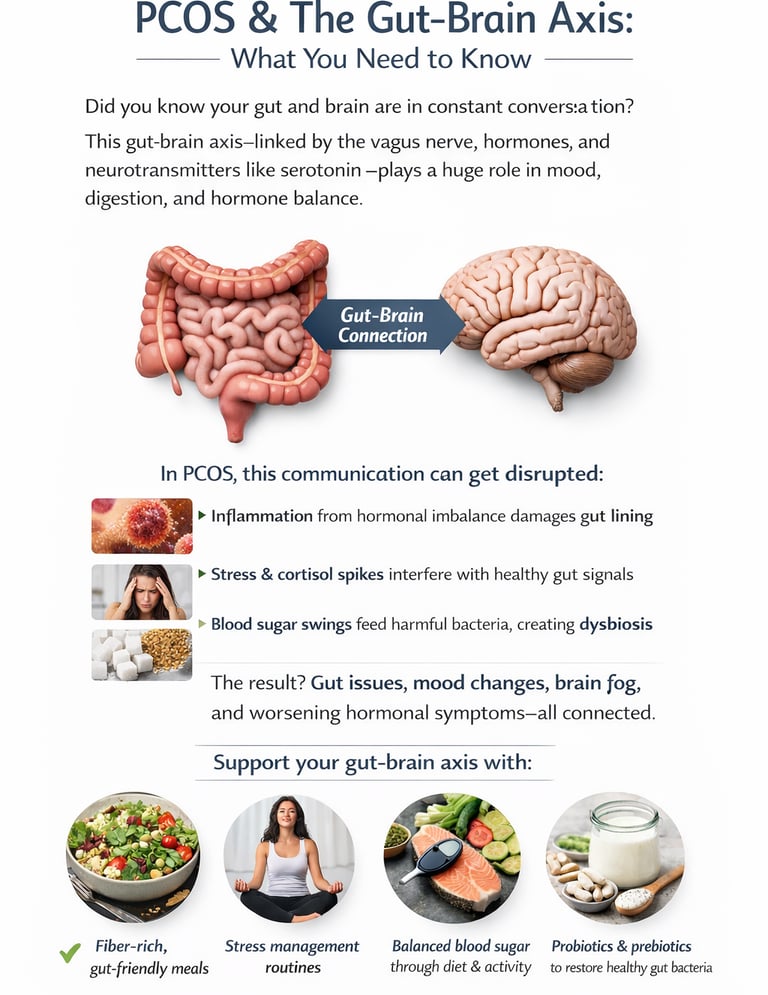
Did you know your gut and brain are in constant conversation? This gut-brain axis—linked by the vagus nerve, hormones, and neurotransmitters like serotonin—plays a huge role in mood, digestion, and hormone balance.
1/19/20261 min read
How PCOS Impacts the Gut-Brain Axis: Understanding the Hidden Connection
Polycystic Ovary Syndrome (PCOS) is often viewed as a hormonal or reproductive disorder, but its effects extend far beyond the ovaries. One of the lesser-known yet powerful ways PCOS affects overall health is through the gut-brain axis—the two-way communication network connecting your gut and brain.
What is the Gut-Brain Axis?
The gut-brain axis is a complex system involving the vagus nerve, hormones, and neurotransmitters like serotonin, the “feel-good” chemical—most of which is actually produced in the gut. This connection ensures that your digestive system and brain work in harmony, regulating mood, digestion, and even hormonal balance.
Dysbiosis: When the Gut is Out of Balance
An imbalanced gut microbiome, known as dysbiosis, occurs when harmful bacteria outnumber beneficial ones. Dysbiosis can trigger inflammation and reduce neurotransmitter production, leading to symptoms such as anxiety, depression, brain fog, and fatigue.
PCOS and Its Impact on the Gut-Brain Axis
In women with PCOS, several factors converge to disrupt this delicate balance:
Chronic Inflammation: Low-grade inflammation, common in PCOS, affects gut lining integrity and neurotransmitter signaling.
Stress & Cortisol: Hormonal stress responses interfere with gut function and microbial diversity.
Blood Sugar Imbalances: Insulin resistance and fluctuating glucose levels impact gut bacteria and the signals sent to the brain.
This disruption creates a feedback loop where poor gut health exacerbates mental health symptoms, while stress and anxiety further compromise digestive and hormonal balance.
Supporting Your Gut-Brain Axis in PCOS
Optimizing gut health can improve mood, hormonal balance, and overall well-being. Key strategies include:
Balanced, fiber-rich diet to feed beneficial gut bacteria.
Stress management through meditation, breathwork, or yoga.
Blood sugar regulation with low-glycemic meals and regular physical activity.
Targeted probiotics and prebiotics to restore microbial diversity.
Understanding the gut-brain connection in PCOS is essential for holistic wellness. By addressing both gut and brain health, women with PCOS can improve not only hormonal balance but also mental clarity and emotional well-being.
Wellniva
Empowering women through holistic wellness coaching.
Contact
+91 8861686135
© 2025. All rights reserved.
Subscribe